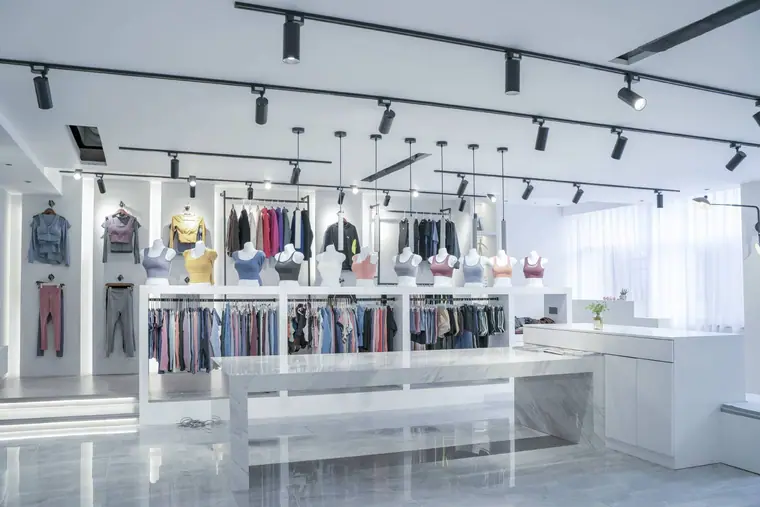
Private label vs white label activewear: which one are you actually buying?
The two terms get used interchangeably on supplier listings, and they describe two completely different businesses. Which one you are buying decides whether your competitor can sell the identical garment next month.
Search for an activewear supplier and you will see both phrases used as if they were synonyms, often in the same listing. They are not. The difference is not cosmetic and it is not about price — it decides whether the garment you build a brand on can legally and practically be sold by someone else.
White label: a finished product with your logo on it
White label means the factory already makes the garment. The pattern exists, the fabric is bought, the production run is scheduled, and what you are buying is a slot in it with your label sewn in and your logo printed on. In activewear this is usually sold as ready stock or stock service.
The advantages are real and worth naming honestly: it is fast (often days rather than weeks), the minimum is low because you are not paying for a development cycle, and the fit is already proven because the factory has sold it before.
The trade-off is equally real. The garment is not exclusive. The same legging, in the same fabric, with a different label, is available to anyone else who asks for it — including the brand that will end up next to you in a marketplace search. You cannot change the construction, you generally cannot change the fabric, and you have no claim over the pattern. If your positioning depends on the product being different, white label cannot deliver it, no matter how good the logo placement is.
Private label: your product, made by someone else
Private label means the garment is developed for you. Your specification, your fit, your fabric selection, your colourway, your trims, your packaging. The pattern is drafted against your measurements and held under your account. You own the tech pack at the end of it.
That is a slower and more expensive first order — you are paying for pattern making, sampling, lab dips and a development cycle before a single piece is cut for sale. It is also the only version of this that produces an asset. After the first program you own a graded, proven block that every future season can be cut from, and nobody else is selling it.
Where OEM and ODM fit
The two terms buyers meet next describe who does the designing inside a private-label relationship:
- OEM — you arrive with a tech pack. The factory manufactures to your specification and does not originate the design.
- ODM — you arrive with an idea, a photo, a fabric feel or a target retail price. The factory’s own design and pattern room proposes the construction, picks the fabrics and develops the garment. You still own the finished tech pack.
ODM is where most new brands actually start, and there is nothing second-rate about it. A factory with a large block library can modify an existing, proven pattern instead of drafting from zero, which halves both the development time and the cost of getting to a sellable garment.
The question that settles it
Ask a prospective supplier one thing: “If I develop this style with you, can another buyer order it?”
A white-label supplier will say yes, or will change the subject to how fast they can ship. A private-label manufacturer will say no, and will offer to put that in writing before development starts. Both answers are legitimate businesses. Only one of them is a foundation for a brand.
We do both, and we will tell you which one your enquiry actually calls for — including when the honest answer is that ready stock will serve you better than a development cycle you do not need yet.

Put it to the test
on a real order.
Send a tech pack, a sketch or a reference photo. You get a quotation within 24 hours, a sample in days, and the inspection standard written into the order before anything is cut.